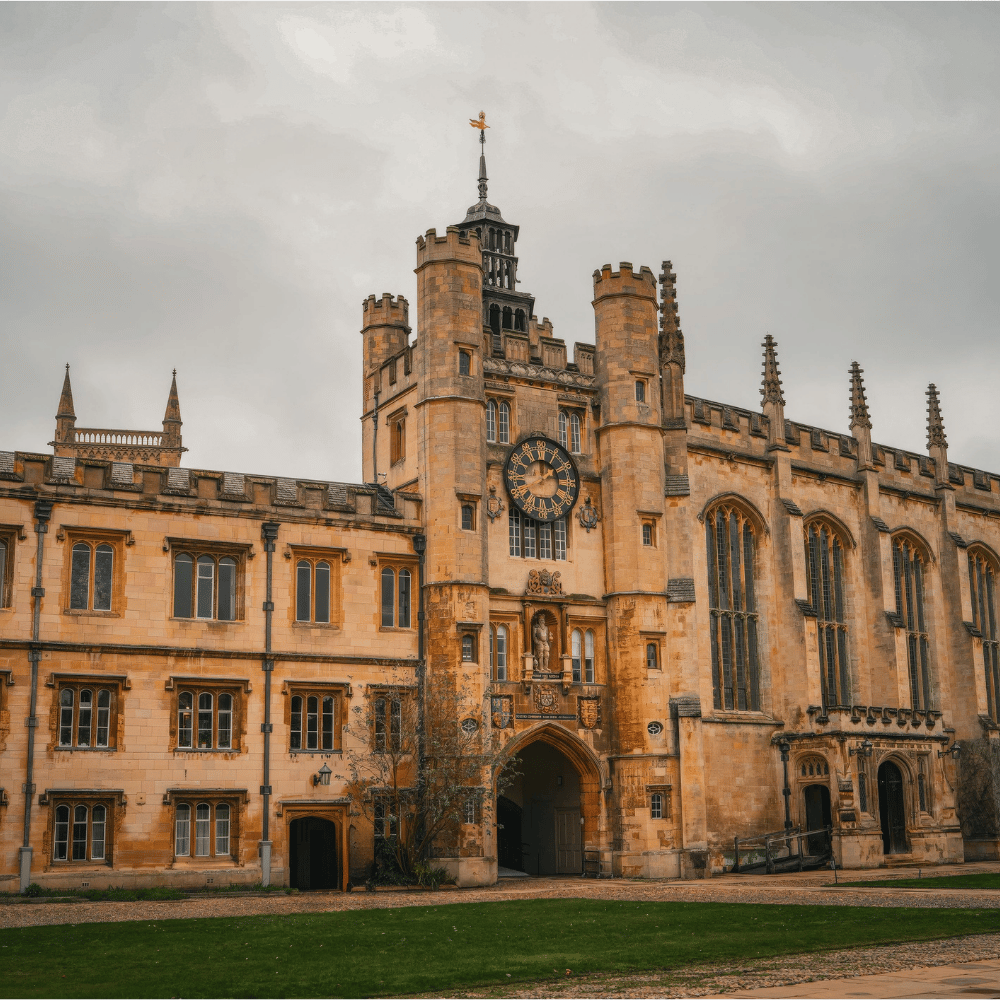
University of Aberdeen - New Structure: What is Changing and What It Means
Higher Education News
An overview of the University of Aberdeen's major restructure — from 12 schools to four faculties, and what it signals for professional services staff across UK higher education.

From 12 schools to four faculties, inside Aberdeen's most significant restructure in decades.
The University of Aberdeen is undergoing one of the most significant restructures in its 530-year history. For professional services staff across the sector, what's happening in Aberdeen is both a case study and a warning sign.
What's changing
Aberdeen's governing body approved plans to consolidate the university's 12 existing schools into four faculties: the Faculty of Arts and Humanities, the Faculty of Business, Law and Social Sciences, the Faculty of Science and Engineering, and the Faculty of Medicine, Health and Life Sciences. The new structure is set to take effect on 1 August 2026.
Four executive deans will be hired to lead each of the new faculties, with the university saying the restructure will "improve performance, increase efficiencies, remove duplication, bring more agility to decision-making and increase consistency to processes and governance."
The financial context
This restructure doesn't exist in isolation. The university is forecasting a £4 million surplus for the end of the financial year, but much of this is due to one-off savings that cannot be relied upon, masking an underlying structural deficit. To break even by 2028, the court agreed a £10 million savings plan.
Approximately 443 permanent positions have been eliminated over the past two years, primarily through voluntary exits, and up to 111 academic posts are now at risk as part of the latest cost-cutting drive. Postgraduate programmes consistently enrolling fewer than six students will also be discontinued.
The opposition
The restructure has not gone through unopposed. UCU says the controversial plan will lead to more well-paid senior roles while over 100 jobs are at risk, and that the university's governance processes are "fundamentally broken" after the restructuring was voted down by the senate. UCU members voted 83% in favour of strikes on a 60% turnout, with demands centred on ruling out compulsory redundancies and securing transparent consultation on the university's "Adapting for Continued Success" programme.
What this means for the wider sector
Aberdeen isn't alone. The University of Edinburgh unveiled plans to cut £140 million, while job losses are also expected at Glasgow Caledonian University, Heriot-Watt University, and Strathclyde University. Dundee University has undergone several rounds of restructuring amid an unprecedented financial crisis.
For professional services staff across UK higher education, Aberdeen's experience underscores a broader reality: consolidation is accelerating, and the institutions most exposed are those with structural deficits that one-off savings can no longer mask.
The bottom line
The shift from 12 schools to four faculties at Aberdeen represents more than an administrative tidy-up, it's a fundamental reimagining of how the institution operates. For staff, that means fewer but broader structures, more shared services, and a changed professional landscape. Whether it delivers the promised efficiencies remains to be seen.
If you're navigating change in your higher education career, Burman can help you find your next step. Browse current opportunities at burmanrecruitment.com.